
Transport Fever 3 city growth explained: 18 levels, XP, six ratings and hamlet-to-metropolis planning. Pre-launch guide.
How Does Transport Fever 3 City Growth Work, From Hamlet to Metropolis?
Quick answer: Towns climb 18 growth levels from tiny hamlet to sprawling metropolis by earning experience points from your passenger and cargo deliveries. How much XP each delivery earns depends on distance, cargo complexity, and six city ratings covering reputation, satisfaction, delivery, traffic, noise, and pollution. Profit alone no longer grows cities: a rich railway beside a miserable town just sits there. Exact XP thresholds are still pending launch verification ahead of release on September 29, 2026.
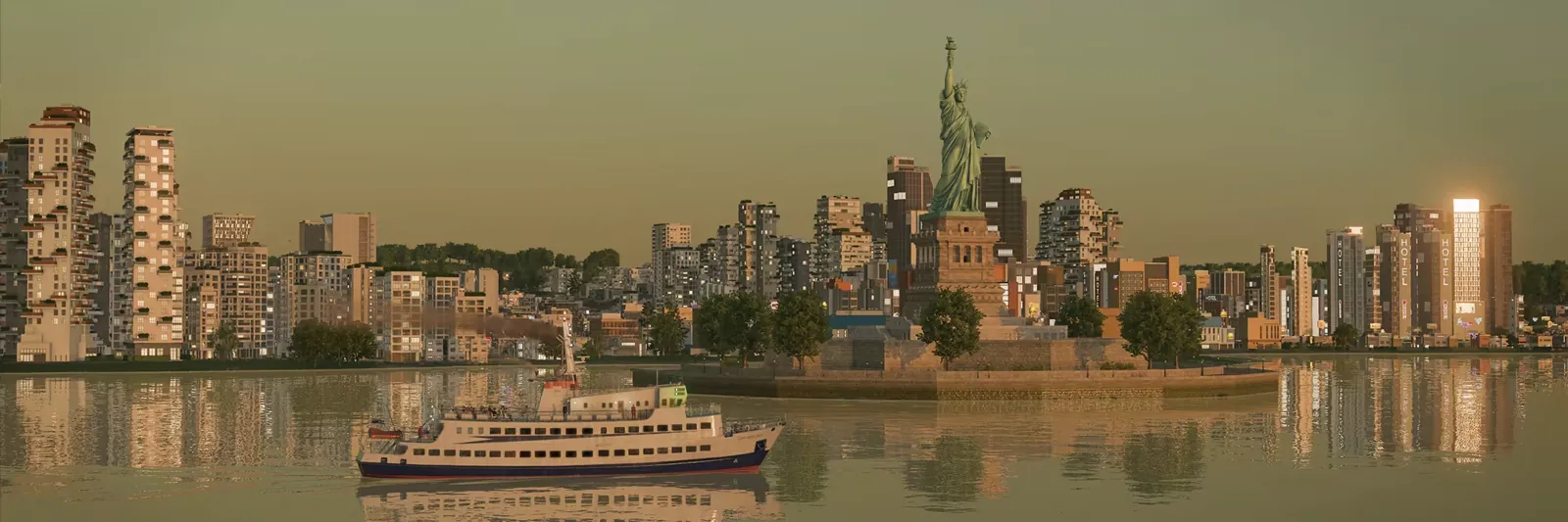
The 18 levels and where experience comes from
The smallest settlements hold fewer than 100 people and count as small hamlets. From there, villages climb level by level to metropolis, 18 growth stages in total, and every stage-up needs experience points. XP arrives through exactly two channels: moving passengers and supplying the goods towns ask for. That direct link between serving basic needs and watching the level bar move is the biggest readability upgrade over TF2, where growth cause and effect always felt foggy.
Official source: Dev Blog Episode 4: Tycoon
Not all deliveries pay equal XP. Passengers traveling within one town, home to work to shops, contribute less than travelers arriving from neighboring cities or farther away, which pushes you toward intercity infrastructure instead of farming one big local bus loop. Cargo XP keys off complexity: the more industries in the production chain behind a product, the more XP its delivery awards. Simple supply runs move volume; deep chains move the level bar. Chain basics are mapped at Production Chains Overview.
Growth also feeds your company rank. World population is the score that lifts you from junior toward tycoon, unlocking headquarters expansions, landmarks, resource prospection, and marketing campaigns. Growing towns is therefore not charity work, it is the progression system. Mode differences around that climb are compared at Tycoon Mode vs Sandbox.
Citizens with actual daily routines
Every citizen simulates home, work, and shopping trips, and they choose like impatient humans. Offer decent transport and they ride; fail them and they drive their own cars or pick closer destinations, which piles congestion onto the roads and starves your lines of riders. Long waits at stations and slow journeys show up as unhappiness markers right in the world under the Episode 5 UI, so neglect advertises itself.
This behavior punishes the classic veteran trap of one giant profitable line plus nothing else. A money-printing intercity express means little if the town's own commuters cannot reach work, because the town needs its daily needs met to award full XP. Cover the boring local network first, then chase the glamorous long hauls.
The six ratings that scale your XP
Deliveries earn base XP, but six city ratings decide how much of it actually counts. Low ratings shrink the growth factor, so a town can receive mountains of freight and still crawl if its ratings are red. Each rating reacts to things you do, which makes growth an active balancing act rather than a delivery quota.
| Rating | What drags it down | How to lift it |
|---|---|---|
| Reputation | Demolishing buildings, clearing forests, heavy earthworks | Build lightly, plant trees, give it time to recover |
| Satisfaction | Long station waits, slow uncomfortable trips | Frequency, faster or more comfortable vehicles |
| Delivery | Late cargo, especially time-critical food | Match vehicle speed to cargo deadlines |
| Traffic | Private cars swamping streets | Good public transport, trams, road planning |
| Noise | Stations, hubs, and traffic near housing | Barriers, routing, quiet vehicles, outskirts hubs |
| Pollution | Industries, infrastructure, vehicle emissions | Minimal efficient building, cleaner fleet, mitigation |
Two details deserve emphasis. First, late cargo still earns you cash but cuts the delivery rating, so a profitable-but-slow food line can visibly stall a town while your bank balance looks healthy. Second, pollution is measured across the whole municipal area, which kills the old trick of hiding dirty industry just outside the border. The environmental half of this table gets full treatment at Noise and Pollution Guide.
Piling more deliveries onto a town with bad ratings gives shrinking returns. When growth stalls despite full platforms, stop adding supply and fix the lowest rating first. One barrier or frequency upgrade often beats ten more truckloads.
Industrial towns versus commercial towns
Towns do not need every cargo to grow, but what you feed them shapes what they become. Deliveries skewed toward industrial products push development one way; commercial goods push it another, and the street-level look follows the mix. That opens deliberate specialization: commuter cities, industrial powerhouses, commercial centers, each tuned by its supply diet.
The tradeoff is slowdown. A town missing whole categories of goods grows slower than a fully supplied one, so specialization is a strategic choice with a visible price. Mixed supply stays the default for fast leveling; specialized towns are a mid-to-late game luxury once your network can afford the XP penalty. Rating pressure also differs by type, since industrial towns generate the pollution that then needs managing.
Urban building variety supports the fantasy with over 400 new town buildings reflecting growth stages, but the mechanical point stands alone: feed a town deliberately, because accidents of supply still count as decisions.
Official source: Transport Fever 3 overhauls city growth
Planning hamlet to metropolis in practice
Early on, serve whatever the hamlet asks for, usually single-link basics, with cheap universal vehicles. Do not overbuild: demolition angers residents and the reputation hit follows you for years of game time. As the town approaches mid tiers, add intercity passenger links for the distance XP bonus and start one complex chain, canned food or books, for the complexity XP bonus.
Late game is ratings management. Big populations mean big traffic, big noise, and big pollution, all scaling against your XP multiplier exactly when each level needs the most points. This is where trams earn their keep: quiet high-capacity street running that cuts both traffic and noise pressure. Street-level options are covered at Trams, Light Rail and Cargo Trams, and the September 2026 tycoon overview confirms the intended toolkit of barriers, underground rail, greenification, and pollution plants.
Official source: Tycoon Gameplay Overview press release
Splitting early attention across five towns gives five mediocre ratings. Concentrate deliveries, frequency, and mitigation on one town until it hits mid tiers and starts paying real XP, then clone the working template outward. Your company rank climbs on world population, and one thriving city beats five stalled ones.
Frequently Asked Questions
How many growth levels do towns have?
Eighteen, from small hamlets under 100 inhabitants up to metropolis. Level-ups consume experience points earned from passenger transport and goods deliveries, scaled by the six city ratings.
Why is my profitable town not growing?
Profit and growth use different scoreboards. Check the six ratings: late deliveries, congestion, noise, pollution, long waits, or recent demolitions can each crush the XP multiplier. Full platforms plus red ratings equal a stalled town.
Do passengers within one city count toward growth?
Yes, but less than intercity travelers. Same-city commuters generate fewer XP than passengers arriving from farther away, so connect towns to each other instead of perfecting a single local loop.
Can I specialize a town as industrial or commercial?
Yes, and the districts visibly follow the supply mix. Expect slower growth than a fully supplied town, plus the pollution or traffic headaches that come with the chosen specialty. Specialize deliberately, not by accident.
Which growth numbers are still unconfirmed?
All precise ones: XP per passenger and per cargo unit, level thresholds, rating weights, and the exact growth-factor formula. The systems above are official; every number attached to them is pending launch verification after September 29, 2026.
More Transport Fever 3 Guides
How money works in Transport Fever 3: delivery income, running costs, full loads, and the route habits that turn thin lines profitable.
Transport Fever 3 landmarks grant area bonuses tied to headquarters and company rank. Confirmed landmarks, how bonuses work, and subsidy details still pending.
Transport Fever 3 loans and contracts explained: dynamic borrowing, risk-versus-reward deals, and rules for debt that builds instead of kills.
Transport Fever 3 mods run through an in-game browser with cross-platform support. Learn Curated Mods, mod.io, and Workshop status.
Cut noise and pollution in Transport Fever 3: barriers, trees, underground rail and fleet maintenance. Pre-launch guide.
Transport Fever 3 offshore oil and fishing guide: rigs, fishing grounds, ships and climate limits for sea supply chains. Pre-launch.
Fix Transport Fever 3 lag and stutter: graphics settings that help, CPU bottleneck advice, and late-game slowdown cures that work.
How Transport Fever 3 production chains work: 37 cargo types, boosters, deadlines and the canned food chain. Pre-launch guide.